
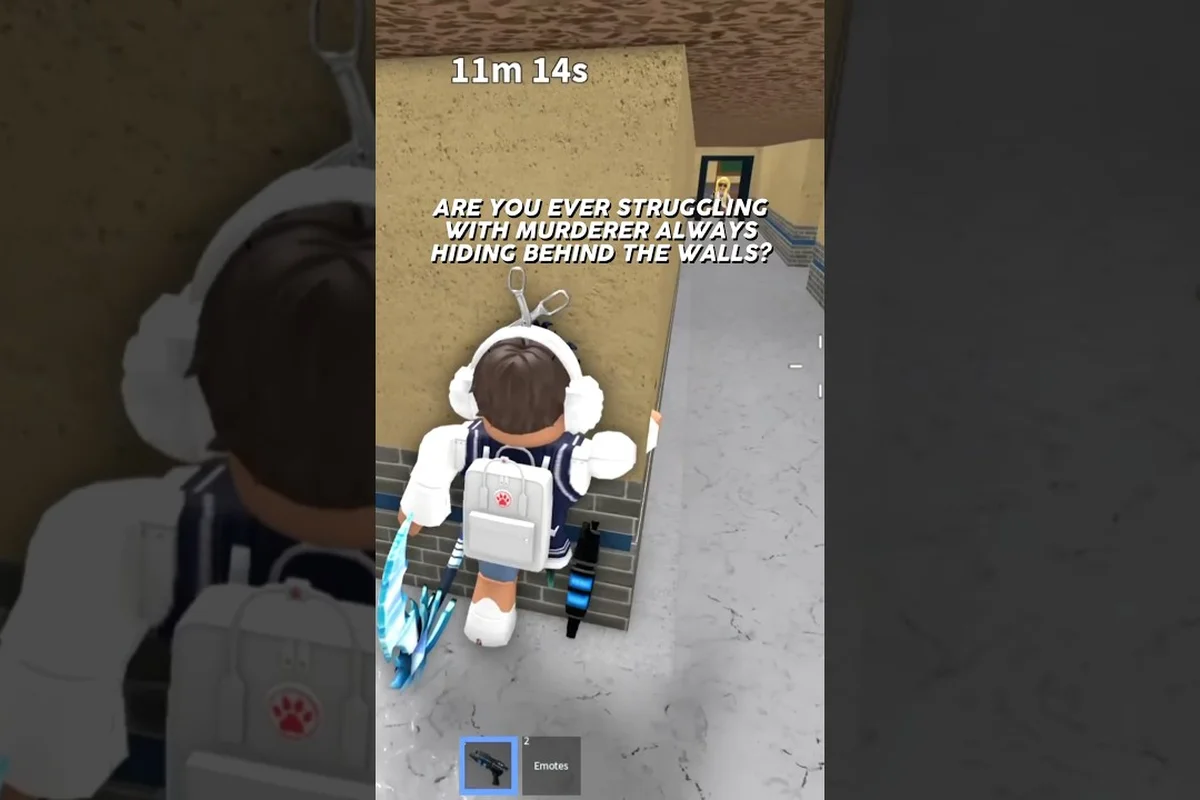
MM2 sheriff tips are worth more than raw aim, because the sheriff is the only role that can end a round with one shot, and the gun drop that follows a dead sheriff decides whether the innocents get a second chance. This guide covers scouting the lobby before the first kill, the behavioural tells you can stack in five seconds, the difference between grabbing a fallen revolver and walking into a trap, and the crosshair placement that turns a single bullet into a round win.
Why the Sheriff Role Decides Most Rounds in Murder Mystery 2
Murder Mystery 2 runs on a simple but brutal loop: one hidden murderer, one armed sheriff, and a lobby of innocents trying to read the room. According to Wikipedia's entry on the game, every round assigns these three roles at random, and the moment the sheriff dies, their Gun Drop lands on the floor for any passing innocent to pick up. That single mechanic is why solid mm2 sheriff tips are worth more than raw aim: the better you play the role, the more often innocents get a second chance, and the more often murderers hesitate before swinging a knife. If you have ever lost a round because nobody picked up the dropped gun, or because the sheriff sprayed into a wall at the wrong second, this guide is built for you.
The sheriff is the only role that can end a round with a single well-placed shot, which is why so many lobbies turn on the player holding the revolver. Walk into the next round with sharper mm2 sheriff tips in mind, and you will notice the lobby starts treating you differently.
Scouting the Server Before Anyone Dies
Great sheriff play begins before the first knife flies. The lobby screen is information: who joined late, who is jumping in place, who changed their avatar mid-countdown. None of it is a guarantee, but layered together it gives you a baseline.
Behavioral Tells You Can Spot in Five Seconds
Eye-tracking patterns are the most consistent tell. Murderers tend to track player movement even when nobody is chasing them, because they are pre-scoping chase routes. Innocents fiddle with emotes, type in chat, or stare at their own gun. Distance from the group matters too — a player who immediately runs to a far corner at round start is statistically more likely to be the murderer, according to community observation across public lobbies. Avatar shuffling (rapidly equipping and unequipping items) is a common nervous habit that experienced players report seeing in would-be murderers.
Sheriff reads are built on stacking tells, not on any single signal — one tell is noise, two tells form a pattern, and three confirming signals (eye-tracking toward future chase routes, abnormal distance from the group at round start, or avatar shuffling on the gun) are what separate a lucky guess from a reliable shot. A concrete example: if a player avoids the lobby spawn, equips the gun then immediately drops it, and turns their camera to track a runner through a doorway with no sheriff role yet assigned, pulling the trigger on them after a coin flip drops a gun is almost always correct. Commit too early on one or two tells, however, and the murderer will simply drop you first — patience until the third signal is what keeps your coin and your streak alive.
The First Fifteen Seconds: Where to Stand
Position is everything during the opening phase. The worst opening move is chasing the murderer into a dead-end hallway at round start — you walk in alone, they turn, and the round ends. The best opening move is staying near loot zones and high-traffic areas so you can react to whoever runs past you. If nobody runs past you for fifteen seconds, that itself is data: the murderer is hunting elsewhere, which means the lobby is safe for a brief window. Hold that window, count your ammo, and do not commit to a chase until someone crosses your crosshair at mid range.
Good lobby discipline from the sheriff is the single biggest factor that lets nearby innocents play their own mm2 innocent tips correctly, because a sheriff who holds the crosshair near loot spawns instead of chasing is essentially pinging the map with his body. When he watches the top-left weapon crate on Town or the central desk on Office, innocents behind him can safely break windows, call out footsteps, and rotate toward his line of sight. If he panic-tunnels after a knife flash into a side room, the same innocents lose their anchor and scatter into the very hallways the murderer is now patrolling.
Gun Pickups, Drops, and Who Actually Grabs the Revolver
The dropped-gun mechanic is the single most misunderstood piece of mm2 sheriff tips. When the sheriff dies, the gun falls where they fell, and any innocent who walks over it can pick it up. This is the moment many rounds flip, but it only works if someone in the lobby knows how to grab it cleanly.
Grabbing the Fallen Gun Safely
The pickup is automatic the moment an innocent walks over the dropped weapon, but mm2 how to pick up gun reliably means understanding positioning. Do not sprint straight at the gun from across the map — murderers camp dropped guns, and the player who blindly charges in becomes the next victim. Instead, approach from an angle that gives you a sightline on every nearby doorway. If you see a player crouching near the gun, do not assume they are friendly; treat that position as a threat until proven otherwise.
| Pickup Situation | Safe Approach | Risky Approach |
|---|---|---|
| Gun in open hallway, no players nearby | Walk straight in, pick up, scan rooms | Sprint blindly, ignore corners |
| Gun near a doorway, suspect nearby | Circle wide, check sightline first | Rush in, trust the lobby |
| Gun dropped after a chase | Wait 3 seconds, watch for camper | Chase the killer, ignore gun |
| Gun near map edge (Town, Hotel attic) | Approach from center, escape route ready | Corner yourself grabbing it |
When You Should NOT Pick Up the Gun
Sometimes the smartest move is leaving the gun on the floor. If you are a low-level player with poor crosshair discipline, picking up the gun and missing a shot makes you a target with no backup plan. If the murderer is camping the gun with a clear line, walking over is suicide. The right call is to back off, signal other players, and let someone with better positioning grab it. This is one of the most overlooked mm2 innocent tips — leaving a gun for a more confident teammate is often a winning play, not a cowardly one.
For a deeper look at the gun drop chain, the sheriff gun guide walks through the exact moment-to-moment mechanics — from the 0.25-second pickup animation lock to the one-bullet magazine reload that leaves the sheriff vulnerable for roughly 1.2 seconds if the first shot misses. Knowing that window explains why hesitant sheriff picks frequently feed free kills to the murderer, and why a confident teammate is almost always the better grabber when the lobby still has three or more players alive.
Aim, Crosshair Placement, and the Single Shot That Ends the Round
Aim is the part of mm2 sheriff tips that players obsess over, but most aim problems are actually positioning problems in disguise. A well-placed crosshair in a chokepoint will out-perform flick shots every time, especially in a game where one bullet usually means a kill.
Crosshair Height: The Detail That Wins Duels
Hold your crosshair at head height (roughly the top of an average avatar's torso) and keep it there even when you are not aiming at a player. The instant you see movement, you are already on target. Players who hold their crosshair at the floor or at the sky waste the first 200 milliseconds of every fight — and in Murder Mystery 2, 200 ms is the entire duel. This is the single biggest separator between a sheriff who wins 1v1s and one who misses every shot.
When to Shoot and When to Hold the Trigger
The biggest mistake newer sheriffs make is firing the moment they see a knife. Pre-firing gives away your position, alerts the murderer, and burns your only bullet. The correct play is to wait until the murderer is mid-swing or actively chasing another innocent — that is when their movement is most predictable. If you have to choose between shooting early and not shooting at all, the better mm2 sheriff tips say to hold the shot and shadow the suspect until a teammate distracts them.
| Firing Decision | Recommended Trigger | Reason |
|---|---|---|
| Murderer running at you head-on | Wait until 3–4 studs away, then fire | Closest distance guarantees hit |
| Murderer chasing another player | Fire when they turn a corner | Predictable line, low risk of team-kill |
| Suspect but unconfirmed player | Hold, follow, gather more data | Avoid wasted shot on innocent |
| Murderer mid-swing on teammate | Fire immediately, ignore team-kill risk | Saving a life > avoiding penalty |
Movement While Holding the Gun
Strafing left and right while aiming is the highest-skill sheriff play, and it matters most in 1v1 situations. The murderer has a longer melee range than newer players expect, so side-stepping in a small arc keeps you just out of reach while you line up the shot. Do not backpedal in a straight line — that is the slowest movement option and the easiest to chase. Circle, sidestep, and never stop moving.
The animation timing is where most sheriff duels are actually won or lost, because the gun has a fixed wind-up before the round fires and a brief recovery frame after the muzzle flash. The sheriff shooting fundamentals guide breaks the cycle into those exact phases so you can time your strafe to land the bullet while the murderer is still finishing their swing — start the side-step just after the wind-up, commit to the shot mid-arc, and reset your strafe direction during recovery so you never sit still twice in a row.
Surviving the Late Game: Hiding, Voting, and the 1v1
The late game is where most rounds are lost, and where the best mm2 how to survive habits separate winners from spectators. Once the lobby is down to three or four players, every decision is amplified: a single misvoted suspect or a poorly placed hiding spot inside a container crate, map-favorite locker, or corner stall can hand the murderer a free knife throw and collapse the entire sheriff investigation. The coin flip of who gets the gun is already decided at this stage, so surviving innocents must prioritize minimizing line-of-sight, tracking the murderer's last known position, and timing their vote to force a sheriff duel before the 1v1 trigger.
Smart Hiding vs. Bad Hiding
mm2 hiding is its own skill, and most players hide badly. The worst hiding spot in any map is the obvious one — the closed closet in Hotel, the corner crate in Town, the single bed in the Asylum dorms. Murderers know these spots because every player runs to them. Better hiding means finding the second-most-likely spot, the one experienced players skip. Think of it this way: if your hiding spot is the first one you thought of, the murderer will check it first. The spot that took you ten seconds to find is the spot they will not bother to check.
| Hiding Spot Tier | Example Locations | Why It Works |
|---|---|---|
| Overused (bad) | Hotel closet, Town crate corner, Asylum bed | Murderers check these first |
| Mid-tier | Behind double doors, under stairs, map-edge shadows | Reachable but rarely searched |
| Strong | Unexplored wing, behind moving NPCs, ceiling spots | Out of muscle memory |
| Risky but rewarding | Right next to other hidden players | Murderer skips after finding one |
The Final Vote: Reading Behavior Under Pressure
Once the murderer is dead or the gun is empty, the round ends in a vote. This is where the social deduction layer of Murder Mystery 2 — well documented in Wikipedia's social deduction entry — actually kicks in. A player who suddenly goes quiet during the vote, a player who votes too quickly, and a player who defends another player without being asked are all carrying data. Vote with the majority when you genuinely do not know, and call out patterns calmly when you do. The sheriff's voice in the lobby matters as much as their aim in the duel.
For a more advanced take on what to do when you are not the sheriff — covering knife drops, lobby positioning, and late-game hiding spots — the innocent survival guide breaks down the best non-armed play, including how to bait the murderer away from the gun drop radius and when to use a thrown knife versus a corner-peek during the final 15 seconds of the round timer.
Sheriff Errors That Throw the Round
Even with solid mm2 sheriff tips in hand, most players fall into the same handful of traps during Murder Mystery 2 matches. The biggest leak is over-pursuing the murderer after landing a shot — chasing past the KnifeCooldown window (roughly 2.5 seconds post-swing) when their throw is locked, instead of backing off and re-aiming. The second is dropping the gun the instant you see a "Innocent" role tag on someone, which leaves you helpless against a second murderer bluffing. Fix the first by always keeping a wall or corner between you and the knife-user after each shot, and fix the second by holding the sheriff gun until the round's murderer is confirmed via the death feed or a credible witness callout.
Mistake 1: Chasing the Murderer
The single most common sheriff mistake is sprinting after a confirmed murderer the moment you see them. Chases favor the knife, not the gun. The killer knows the map's tight corners, can swing around faster than you can stop, and will let you chase straight into a teammate they have already killed. The fix is to hold the middle of the map, force the murderer to come to you, and let the sightlines do the work.
Mistake 2: Shooting Too Early
Pre-firing burns your only bullet and announces your position. This mistake compounds in the late game: the player who wasted a shot at round start has nothing for the 1v1. The fix is the two-tell rule — do not fire until you have spotted at least two behavioral tells on the same player, ideally at close range.
Mistake 3: Tunnel Visioning on the Knife
A sheriff who fixates on a swinging knife forgets to check behind them. The murderer feints, you track the knife, and the second murderer (if present) or a thrown projectile finishes you. The fix is to pan the camera every two seconds during a chase, even if the knife is right in front of you. That single habit saves more lives than any aim training.
Tunnel visioning is just one of roughly a dozen traps that new sheriffs fall into, so it pairs naturally with the Murder Mystery 2 beginner mistakes guide for a full sweep — that article breaks down coin-spending errors, premature gun drops, and the classic "shoot the wrong silhouette" mistake, giving you a checklist to audit after every lobby so your sheriff win rate climbs steadily.
How the Murderer Plays Into Your Sheriff Strategy
The best mm2 sheriff tips start by reversing your perspective: instead of planning where YOU will patrol, map out the murderer's three optimal knife-throw angles from common spawn points like the Map Lobby, the Asylum cell block, and the House 2 upstairs corridor. A murderer typically has 4–6 seconds of untracked vision after a successful stab, so your counter-play as sheriff is to hold corners that cut off those escape routes rather than chasing footsteps. Once you predict the killer's rotation toward the next isolated innocent, your revolver timing becomes almost mechanical.
Knife Throws: When the Knife Becomes a Ranged Weapon
Knife throws are a high-skill murderer move and the single biggest threat to a sheriff holding distance. When the killer is aiming a throw, their arm cocks back slightly, and that is your cue to sidestep perpendicular to the line of sight. The knife travels in a straight line, so even a small lateral movement usually dodges it. If you are caught at close range, your only counter is to fire first — there is no time to dodge a point-blank throw.
For the reverse angle, the knife throwing guide breaks down the murderer's timing windows in detail — covering the roughly 0.6–0.8 second wind-up animation, the optimal firing distance (mid-range, where the knife's hitbox is widest), and how a sheriff who has just unholstered their gun can bait the throw by strafing before committing to a shot.
Reading Feints and Fake-Outs
Murderers feint constantly: they swing empty, they fake a throw, they pretend to chase one player then pivot to another. The counter is to commit to your read. If you have identified the murderer, treat every movement as a confirmation, not a reversal. Players who change their mind mid-chase lose more duels than players who stick with a wrong read, because indecision is what knife throws punish.
Using the Lobby as a Shield
The smartest sheriff play is keeping at least one innocent between you and the murderer. The murderer cannot throw a knife through a teammate, and a swinging knife that hits the wrong target wastes their window. This is a mm2 how to survive trick that works just as well for the gun-holder as for unarmed players: stay near other players, force the killer to choose, and let them make a mistake.
Putting It All Together: A Sheriff Checklist for the Next Round
A clean, repeatable routine is what turns scattered mm2 sheriff tips into actual wins, and the seven-step checklist below captures the exact decision points veteran sheriffs run through every lobby: lobby read, opening position, first tell, crosshair discipline, gun drop handling, 1v1 entry, and late-game voting. Each step is timed because information in Murder Mystery 2 decays fast — a player who was silent at 0 seconds can be mid-swing by 30, and the gun can change hands in a single round. Treat the list as a muscle-memory drill: hit every step in order for ten straight rounds before you start improvising, because the role's coin flip is only random until you stack reads, crosshair placement, and disciplined rotations faster than the murderer can adapt.
-
Lobby read (0–10 s): note who joins late, who is jumping, who is silent.
-
Opening position (10–15 s): hold map center, avoid dead-end chases.
-
First tell (15–30 s): identify one suspect, gather a second data point.
-
Crosshair (always): head height, mid-range chokepoint, no pre-firing.
-
Gun drop (when it happens): angle in, watch for campers, do not grab alone.
-
1v1 entry: sidestep in an arc, fire at 3–4 studs, never backpedal straight.
-
Late game hiding: skip the obvious spots, vote with the data, not the panic.
Run that list for ten straight rounds and your sheriff win rate will climb. It will not happen overnight, but the gap between a thinking sheriff and a reactive one is exactly the gap the role is designed to reward.
Frequently Asked Questions
What is the fastest way to get better at the sheriff role?
Play ten rounds in a row focusing on one habit at a time. Start with crosshair height for three rounds, then movement during chases for three rounds, then late-game voting reads for the final four. Stacking single habits like this is faster than trying to fix everything at once and is the foundation of the strongest mm2 sheriff tips players use to climb.
Should I pick up the gun if I am not confident with aim?
Only if the murderer is far away and you can grab it safely. If the killer is camping the dropped gun, your best play is to back off, signal other players in chat, and let a more confident teammate take it. Picking up a gun just to miss your only shot is a worse outcome than leaving it for someone who can land the kill.
How do I dodge a knife throw as a sheriff?
Sidestep perpendicular to the knife's line of travel the moment you see the murderer's arm cock back. The knife travels in a straight line, so even a small lateral movement is usually enough. At point-blank range, dodging is not realistic — your only counter is to fire first before the throw animation completes.
Where are the best hiding spots in Murder Mystery 2?
Strong hiding spots are the ones most players do not think of first: secondary rooms off the main path, map-edge shadows that take longer to walk to, and spots behind moving NPCs that break line of sight. Avoid the closet, the crate, and the bed — every killer checks those within the first ten seconds of a search, and that is why mm2 hiding works best when you skip the obvious choices.